

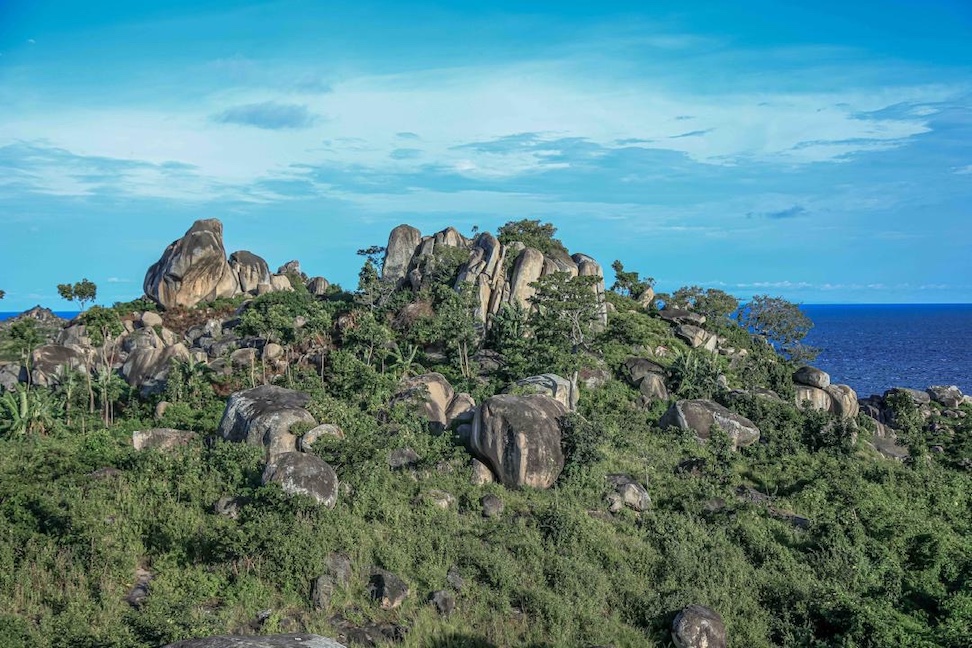
On the far northeastern stretch of Lake Victoria, where Uganda almost touches Kenya, lies Dolwe /Lolwe Island, a hidden world of stories carved in stone. From a distance, the island looks like a necklace of granite boulders rising from the water, one rock balancing on another as if the wind had shaped them into castles. When the sun falls on them, the stones glow and if you listen long enough, they seem to hum perhaps the echoes of the people who once lived here, the ones who left their marks behind. Dolwe is an island a living museum. Its granite faces hold thousands of carvings, paintings, and engraved hollows mysterious scoops in the rock that no one truly understands. Some say they were ritual spaces, others think they were messages to the spirits or to the skies. Whatever their meaning, they remind every visitor that Dolwe’s silence is full of memory.
A Landscape Etched in Time.
The island, only about 25 square kilometres, is among the most extraordinary heritage landscapes in East Africa. Hidden within its rock shelters are red and white paintings of circles, spirals and symbols a language of art older than any story now told. At Bugire and Kandege, near the town of Golofa, these images stretch beneath a massive boulder weighing more than a hundred tons. Some of them hang from the ceilings of caves, protected for centuries from wind and rain. Archaeologists say Dolwe has one of the largest concentrations of “rock gongs” in Africa stones that ring like bells when struck. Long ago, people used them for communication, ceremony, or perhaps to call upon spirits. Even today, some islanders say they still hear the voices of their ancestors carried in the wind, the gongs echoing faintly across the granite hills. There are the hollows thousands of them carved into smooth granite slabs, each shaped by patient hands. No one knows exactly why they were made, but their sheer number and precision suggest something sacred. From the top of these boulders, the lake stretches endlessly blue, dotted with the white sails of fishing boats, a sight as ancient as it is timeless.
Voices from the Past.
Dolwe’s story is one of migration and resilience. Oral history says the first settlers were the Bavuma people, who came from Buvuma Island in the early 1900s. They fled after defying their king and found refuge among these rocks. Over time, others joined people from Busoga, Samia, Luo, and Kenya’s Suba communities all drawn by fishing and the promise of safety. But Dolwe’s past has not always been peaceful. Sleeping sickness outbreaks in the 1920s and again in the 1950s forced many to leave, leaving the island quiet once more. The ancient legends faded, but some of the old beliefs still live on. In caves and under giant rocks, prayer groups gather to sing and call upon the spirits that guard the island. To them, Dolwe is home and a sacred place where the past and present meet.
Reclaiming a Forgotten Heritage.
In recent years, Dolwe’s cultural treasures have drawn new attention. The Department of Museums and Monuments, together with the Trust for African Rock Art (TARA) and United Nations Educational, Scientific and Cultural Organisation (UNESCO) launched a conservation project to document and protect the island’s heritage. The survey recorded more than 12 rock paintings, 13 rock gongs and 10 engraving sites where some newly discovered, others long forgotten. The team also found pottery fragments, ancient tools and traces of early settlements. Workshops and community sensitisation drives were held to teach residents about the value of their heritage and how to protect it. “Conservation begins with awareness,” said a senior conservator who led the project. “Once people understand that their land holds history older than kingdoms, they protect it with pride.” Now, Dolwe stands not only as a site of mystery but also as a symbol of preservation a place where science, spirituality and storytelling come together.
The Island Today
Today, Dolwe has around 10,000 people and most live along the shores where fishing boats line the waters. The main town, Golofa, hums with trade and the sound of engines, laughter and nets being mended. Children play near the rocks that hold the ancient carvings, unaware that their playgrounds are older than history itself. The air smells of fish and wet papyrus, and at night, lanterns glow across the water like floating stars. Dolwe is peaceful, wild but welcoming. The songs of the lake birds mix with the chatter of markets and every visitor who comes leaves feeling as if they have stepped into a world both lost and alive.
Where to Stay
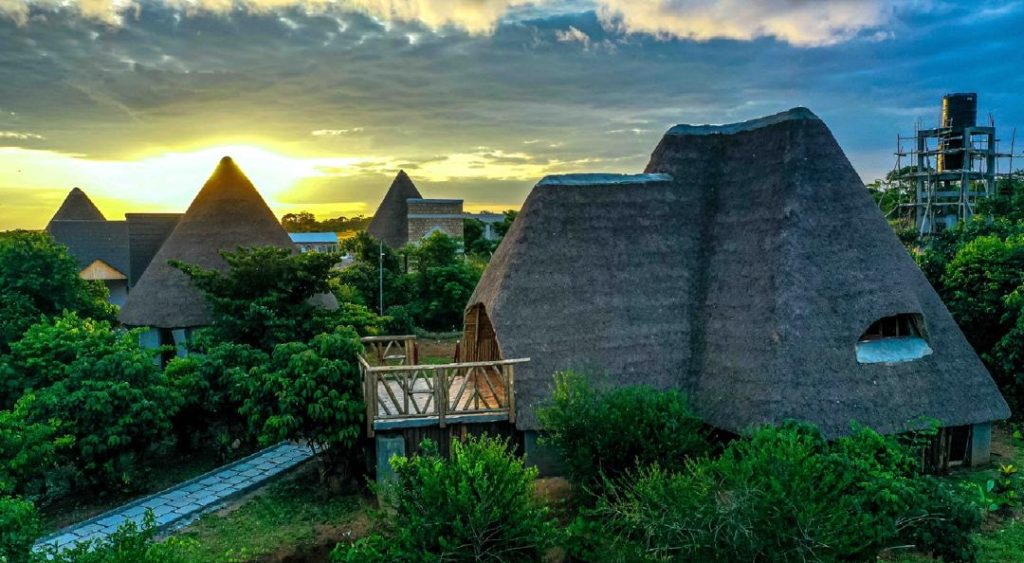
La Fang Eco Resort. For travellers seeking comfort amid this rugged beauty, La Fang Eco Resort is Dolwe’s hidden gem. Perched above the lake, the resort blends naturally into the island’s landscap, cottages tucked between rocks and trees, each opening to the wide shimmer of Lake Victoria. The resort offers rooms for every traveller, from cosy budget stays to luxurious suites with lake views. There’s a swimming pool carved like a lagoon, a restaurant serving freshly caught tilapia, and a bar that glows softly at sunset. In the evenings, guests gather to watch the sky turn gold while local musicians play by the fire. La Fang is more than a lodge; it is an experience. The team supports local guides, hosts cultural evenings, and organises visits to the island’s rock art sites and fishing villages. Guests can also enjoy birdwatching, canoe rides, and gentle hikes across the granite hills. For those who come seeking peace, the sound of waves and distant drums makes every night unforgettable.
How to Get There
Reaching Dolwe is part of the adventure, from Kampala, travellers drive east toward Jinja, through Iganga and Mayuge, before turning off at Musita Trading Centre. The road continues about 54 kilometres to Bwondha Landing Site in Namayingo District the main gateway to the island. From there, a public ferry, MV Sigulu which sails to the island on Monday, Wednesday, Friday and Sunday. This takes you about three to three and a half hours to reach Dolwe, cutting across the blue waters where fishermen cast their nets. Private boats also operate daily for those who prefer a slower, scenic journey. For now, the island remains blissfully with less cars. Transport within Dolwe is more by boda boda (motorcycle taxi), which weaves through sandy paths and quiet villages. Plans are underway to establish a small airstrip for charter flights but for now, getting here is as raw and beautiful as the destination itself.
The Future in the Rocks.
Dolwe Island is a place where time feels suspended where ancient hands carved symbols into stone, and modern lives unfold quietly beside them. It is one of those rare places where culture, nature and humanity are still deeply intertwined. To stand on its rocks is to feel the rhythm of something timeless which is a pulse that beats through Uganda’s heritage. For travellers, it is a journey into mystery and for Ugandans, it is a reminder of the deep roots that anchor their story to the land and water. Dolwe is waiting, the stones still whisper and the lake still sings.