

A Journey Into Nature, Knowledge and Conservation
By CHELANGAT MESHACK Chairman, Yatui Bird Watching Club
A Long-Awaited Beginning
It was the long-awaited opportunity I had been dreaming and imaging of, when the day finally came, it felt unreal. I had the privilege of joining an amazing team from Avian Conservation Uganda, working alongside Tribe56 Cultural Expedition Ltd, for my very first birding experience in my own region. The morning welcomed us gently with birds chirruping in the distance, leaves swaying softly and the forest breathing in its own quiet rhythm. When I was handed a pair of binoculars for the first time, everything changed.

Seeing birds up close with their lovely colors, shapes, movements and learning their names felt like being introduced to a hidden world that had always existed around me, yet remained unseen. My mentor Godfrey Elasmus Tumwesigye, the team lead, patiently shared his field experiences, while Hilda Victoria Namulwana, also my mentor, guided us with deep knowledge and encouragement. Surrounded by fellow colleagues, I felt both excited and inspired, I knew this was the beginning of something important.
Walking With the Weather
The hike itself was manageable, though nature tested our commitment. The weather was not very friendly with thick clouds covering the sky almost the entire day, and rain became our constant visitor. But instead of stopping us, the rain seemed to remind us that we were guests in the birds’ home. Wet boots, muddy paths, and cold air became part of the experience, teaching us patience and resilience.

Despite the conditions, our eyes and ears stayed alert, always scanning the treetops and listening carefully to every sound.
Meeting the Birds
During the birding sessions, we observed over 70 beautiful species, including the peregrine falcon, chestnut, bronze sunbird, foxy cisticola, oriole finch, western citril, and many others. Each sighting brought excitement, but one bird stood out above all others for me and that was the hartlaub’s turaco. The turaco is my favorite bird because of its striking appearance, the unique sound it makes, and its strong presence in the forest. Beyond its beauty, the turaco has a deep connection to our community. It is closely associated with the Prunus africana tree, an indigenous species highly valued among the Mosopisyek people.
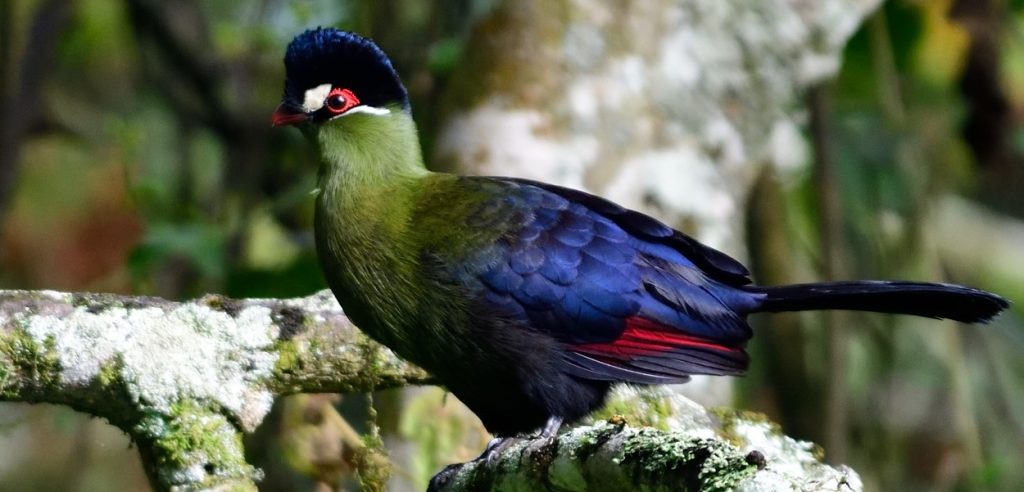
This tree is used in traditional medicine to treat early stages of cancer, prostate issues, stomach aches,fever, malaria, wounds and respiratory conditions, showing how birds, plants and people are deeply connected in our ecosystem.
Days Measured by Wings and Time
Our birding activities were well structured and intense. Each day, we spent three hours in the morning, two hours in the mid-morning, and three hours in the evening, continuing this routine for three consecutive days. Through this dedication, we managed to observe more than seventy bird species, including some rare ones. Every hour in the field sharpened my skills and deepened my respect for birds and their habitats.
Crossing Streams, Building Bonds
One of the most unforgettable moments of the hike was crossing the streams. On our way to the cave, we crossed three streams, and later crossed another stream while birding in the forest. There were no bridges. Instead, we held hands, forming a human chain to support one another as we crossed the flowing water. Those moments taught me something powerful, conservation is not an individual effort, it is built on teamwork, trust and unity, just like holding hands while crossing a river.
Growing the Community
On the first day, two community members joined us, and on the second day, three more came along. We actively engaged the community, talking to them about bird conservation and the importance of protecting birds and their habitats.
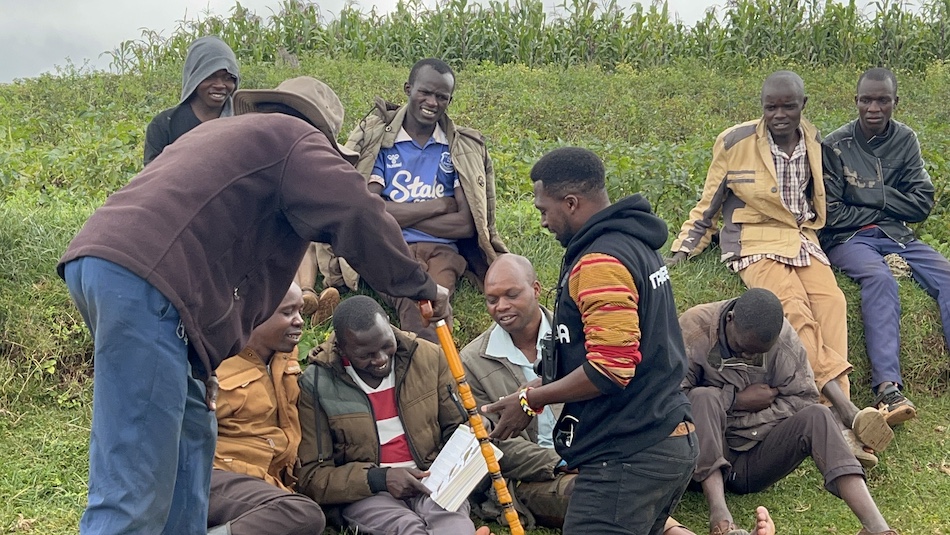
The response was encouraging, people listened, understood, and agreed to work together with Avian Conservation Uganda. This gave me hope that conservation can truly start at the community level.
The Beauty of Mount Elgon Region
The birding took place in the Sebei region, an area rich in breathtaking scenery. Places like Mukuuso Cave, flowing rivers, rolling landscapes, and small hills made the experience even more special. We specifically worked in Sabu Village, Yatui Parish, Tuikat Sub-county, Kween District, in Eastern Uganda. The people here are peaceful, welcoming, and hospitable, living in harmony with nature.

Part of our birding was conducted in Mount Elgon National Park, an area home to over one hundred bird species. The park hosts stunning features such as Jackson’s Peak, Jackson’s Table, Jackson’s Pool, and Wagagai, the highest peak of Mount Elgon. The mountain, standing at 4,321 meters, was discovered by Joseph Thomson and remains a symbol of natural beauty and biodiversity.
Birds, Belief and Medicine
In the Mosopisyek community, birds are not just animals, they carry meaning. Some birds, like the turaco, help predict seasons, signaling the coming of rain or dry periods. Others, such as the peregrine falcon, are believed to have medicinal value and are traditionally used to treat chest pain. These beliefs highlight the deep relationship between people and birds, making conservation not just scientific but cultural.
A Promise to the Future
I regularly access the forest every Saturday and Sunday evenings with my teammates in Yatui, and I hope to one day capture these birds through photography to support conservation awareness. From everything I learned in the field, I made a personal promise to myself: to serve as the Chairman of the Bird Watching Club in the Mosopisyek community in Yatui.

This first day in birding was not just an activity but a calling. A reminder that protecting birds means protecting culture, nature and future generations.