

Swalah Kuteesa Kadoma was once known for his strength and the sharp rhythm of his fists in the boxing rings of Kampala, where survival depended on discipline, endurance and grit. His life revolved around competition in the city, far removed from the quiet rhythms of the countryside where he had grown up. Yet beyond the noise and intensity of the sport, something else began to call him, something he could neither explain nor ignore. It came in the form of recurring dreams, vivid and persistent. In them, a giant chimpanzee would appear before him, not as a threat, but as a watchman. It stood calmly, almost protectively, as though it had come with a message.
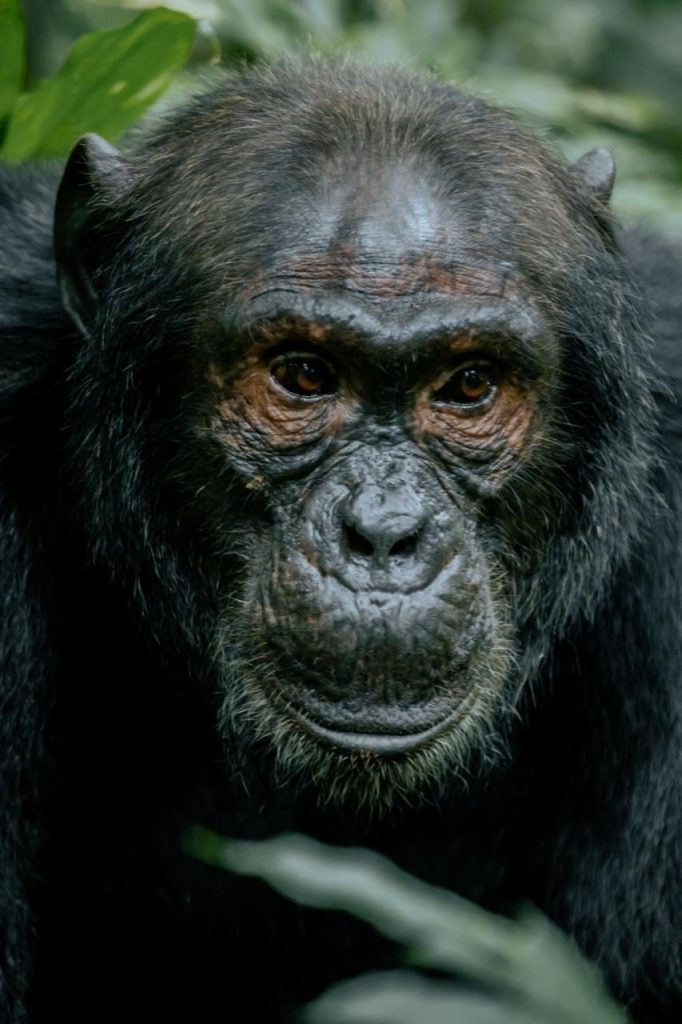
To many, such visions might have been dismissed as imagination, but for Swalah, they carried a deeper meaning rooted in the beliefs of his people, the Banyoro. He understood them through the lens of cultural knowledge passed down through generations. He believed the presence in his dreams was the Mwirium spirit, a guardian of nature reaching out to him with a clear instruction to return home, speak for the chimpanzees and protect what was being lost. Answering that call meant leaving behind everything he had built in Kampala. Swalah returned to Kagadi, to the land of his childhood, expecting familiarity but instead encountering a place that had changed in ways that were both visible and deeply unsettling. The forests he once knew were thinning and shrinking, steadily cleared for farming and settlement. The relationship between people and chimpanzees, once defined by respect and kinship, had fractured. Animals that were once revered were now entangled in cycles of fear, conflict and misunderstanding.
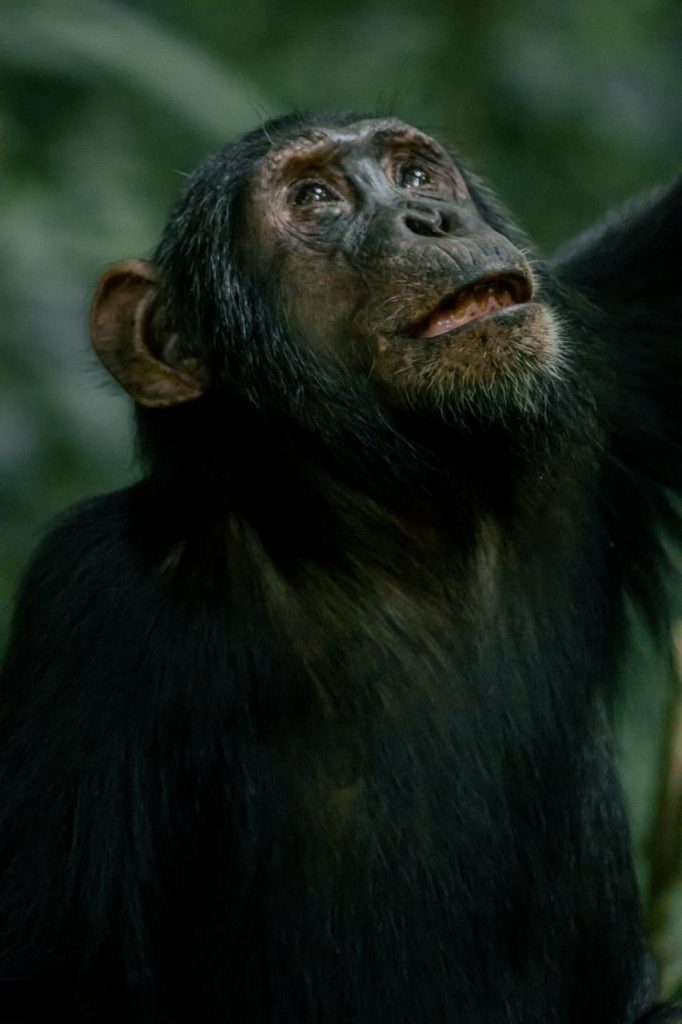
Among the Banyoro, particularly within the Batangyi and Bayanja clans, the chimpanzee has long been regarded as family. Children grow up hearing that the chimpanzee is their grandfather, a keeper of the forest and a symbol of continuity between humans and nature. These beliefs were not abstract ideas but part of everyday life, shaping how communities interacted with their environment. It was believed that harming a chimpanzee would bring consequences; teeth would fall out, illness would follow and misfortune would visit entire families. These cultural systems functioned as powerful tools of conservation, ensuring protection without the need for formal enforcement.
Over time, however, these traditions began to weaken. As populations grew and land became scarce, forests were cleared at an increasing rate. Younger generations, less connected to traditional teachings, began to drift away from these cultural safeguards. The balance that had sustained coexistence for centuries began to collapse, giving way to tension and tragedy.
One of the most haunting incidents occurred in 1991, when an elder’s son captured and killed a baby chimpanzee. In response, the mother chimpanzee entered the community and took a human child. She did not kill the child immediately. For eight hours, she lingered, as though waiting for an exchange that never came. When none was offered, she killed the child. In the years that followed, conflicts intensified. More than 80 people have been injured and at least four children have lost their lives. Each incident deepened fear and mistrust, making coexistence seem increasingly impossible. In October 2025, after two years of relative calm, tensions erupted again when a mentally challenged man attacked a chimpanzee, cutting its arm. Within a week, chimpanzees entered the community and took a child who did not survive.
The incident reignited anger and grief, with many community members directing their frustration toward conservation efforts. Swalah and his group became targets of blame, accused of encouraging chimpanzees to remain in the area through their tree restoration work. In a moment of collective anger, six acres of young forest were destroyed, uprooted in protest and pain.
Yet even in the face of such setbacks, Swalah remained committed to his path. In 2016, guided by his visions and the realities he had witnessed, he founded Friends of Chimpanzee Family. What began as a small group of determined individuals grew out of a belief that coexistence was still possible. The early years were marked by limited resources, scepticism and the heavy burden of ongoing conflict. Progress was slow, but the mission endured. A turning point came in 2018 with the support of the Cross-Cultural Foundation of Uganda. The organization provided training that exposed Swalah and his team to new approaches in conservation, community engagement and sustainable livelihoods. Their time in Kampala broadened their perspective, equipping them with tools to rethink their work. When they returned to Kagadi, they shifted their approach, choosing to work with the community rather than against it.
They introduced initiatives that addressed both environmental protection and economic survival. Beekeeping using local hives provided income while encouraging the preservation of forests, as bees thrive in healthy ecosystems. Craft making and pottery offered alternative livelihoods, reducing dependence on activities that degrade the environment. Tree planting became central to their mission, particularly in Katyobona Forest, a 12-acre privately managed area that forms part of what was once a vast ecological corridor linking major forest systems. Though much of this corridor has been degraded, the vision remains to restore its connectivity and ecological value.
Today, Friends of Chimpanzee Family has grown into a network of over 200 members across Muhorro, Kibale and Kagadi. Their base in Karuswiga Ward has become a hub for conservation and community engagement.
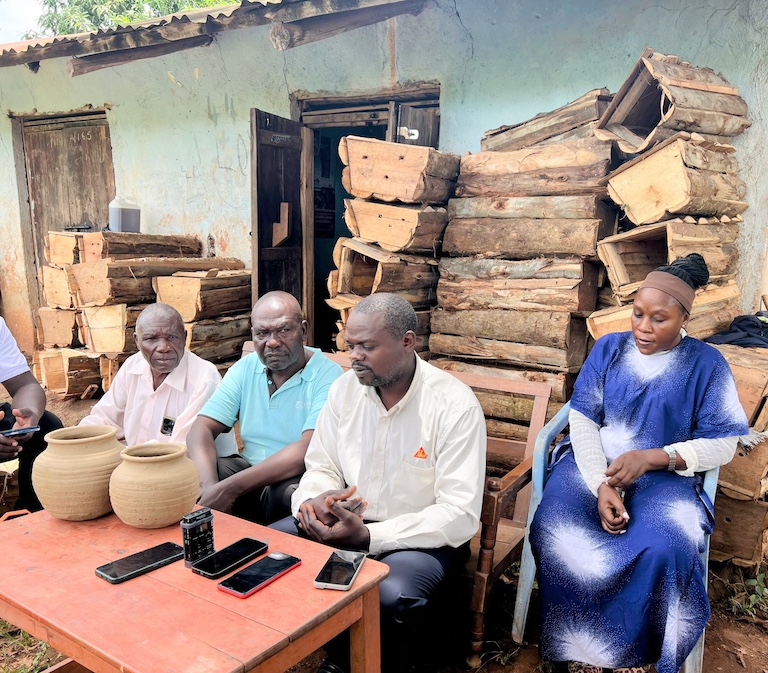
Yet challenges persist. Population pressure continues to strain land resources, forests such as Kagombe have been degraded by up to 80 percent, and wetlands are increasingly converted into farmland. Awareness about conservation remains uneven, and perhaps most difficult of all is rebuilding trust both between people and chimpanzees and within the community itself.
Swalah and his team understand that change is gradual. Their efforts now focus not only on protecting chimpanzees but also on improving livelihoods. Former hunters are supported to transition into goat rearing and pottery, while farmers are encouraged to adopt agroforestry practices, planting crops like cocoa and coffee that generate income without destroying ecosystems. Through weekly four-hour radio programs on Kibale–Kagadi Radio, they engage communities in conversations that are slowly reshaping attitudes and rebuilding understanding.
Despite the difficulties, there are signs of progress. Parts of the Kagombe Central Forest Reserve have been rescued and preserved with government support. Reforestation efforts are expanding, driven by collaboration between communities and institutions such as the Uganda Wildlife Authority.
As forests recover, wildlife is beginning to return. Chimpanzees are finding safer habitats and the area is attracting visitors interested in trekking, birding and nature walks. Even rare species like pangolins have been rescued through community-led efforts. Swalah’s journey is no longer defined by the boxing ring but by a different kind of fight that demands patience and the ability to navigate complex human and environmental realities.