

On Gangama Hill, a restored home, living heritage and green landscapes are bringing one of Eastern Uganda’s most remarkable stories to a new generation.
There are places where history is preserved behind glass, and there are places where history seems to breathe around you. High on Gangama Hill, on the slopes of Mount Elgon overlooking Mbale City, the Semei Kakungulu Museum belongs to the latter.

Quietly set within a green 3.5-acre landscape, the museum is more than a collection of old objects. It is a place where the story of one of Uganda’s most fascinating historical figures unfolds through a house, photographs, personal belongings, oral histories, trees, walking trails and the landscape that shaped his later years.
Opened in November 2024 after its renovation by Cross Cultural Foundation of Uganda (CCFU), the museum has become a new heritage point on Eastern Uganda’s tourism circuit, inviting visitors to pause and encounter the complicated, remarkable and deeply human story of Semei Lwakirenzi Kakungulu.
A Legacy Brought Back to Life
Walking into the museum is, in many ways, an introduction to a man whose life crossed several chapters of Uganda’s history.
Born in 1869, Semei Kakungulu became a prominent military leader and administrator during the period when British influence was expanding across Eastern Uganda. His story took him from the world of expeditions and military campaigns into administration and leadership, eventually becoming associated with the governance structures of the region.

But his legacy did not end with politics or military leadership.
Later in life, Kakungulu became increasingly devoted to independent religious study. His spiritual journey eventually led to the establishment of the foundations of Uganda’s Abayudaya Jewish community, creating a remarkable chapter in the country’s religious and cultural history.

At the museum, that journey is told through original photographs, historical documents, oral histories gathered from family members and elders, and carefully curated exhibition panels.
The result is not simply a chronology of dates and events. It is an invitation to understand the many sides of a man who lived through a period of profound change.
Inside the House That Holds the Story
At the centre of the experience is Kakungulu’s historic residence, a restored colonial-era brick house that has been transformed into a window into his world.
A sculpture of Kakungulu welcomes visitors as they enter, setting the tone for what follows.

Inside are objects that speak quietly about his life and position. A Victorian-era bed, dressing mirror and table offer glimpses into the domestic world of the period. A communication drum, locally known as Kungula, reflects the importance of communication and authority in a time when drums carried messages across communities.
A spear recalls his association with hunting and the traditions of the time, while walking sticks, a traditional stool and other personal objects add texture to the story of a man who commanded considerable influence.
Among the most significant objects are those connected to his religious journey, including a Jewish kippah. Together, these objects reveal a life that moved through military, political, environmental and spiritual chapters.
Each artefact becomes a small doorway into a much larger story.
A View Across Mbale
Perhaps one of the museum’s greatest treasures is not inside the house at all. Step outside and Gangama Hill opens into a remarkable landscape.
Mbale City stretches below, while Mount Elgon forms a dramatic backdrop in the distance. The elevated setting gives the museum a sense of openness that makes the visit as much about landscape as it is about history.

The grounds remain beautifully green, reflecting another important part of Kakungulu’s legacy. He was an early advocate of environmental conservation and is remembered for planting large numbers of mvule trees in the region.
For a man whose life was marked by movement, leadership and transformation, it is fitting that his heritage site today offers a place of stillness. Birdsong replaces the noise of the city, trees provide shade and the air feels cooler. Visitors can sit quietly and take in the view.
The landscape itself becomes part of the museum.
Following Kakungulu’s Trail
Beyond the main exhibition, visitors can follow trails around the site and towards places connected to Kakungulu’s story.
Among them are the remnants associated with the first Abayudaya synagogue, adding another important layer to the experience.
The trails offer an opportunity to move beyond conventional museum viewing. Instead of simply looking at objects, visitors walk through a landscape connected to the person whose story they have come to understand.
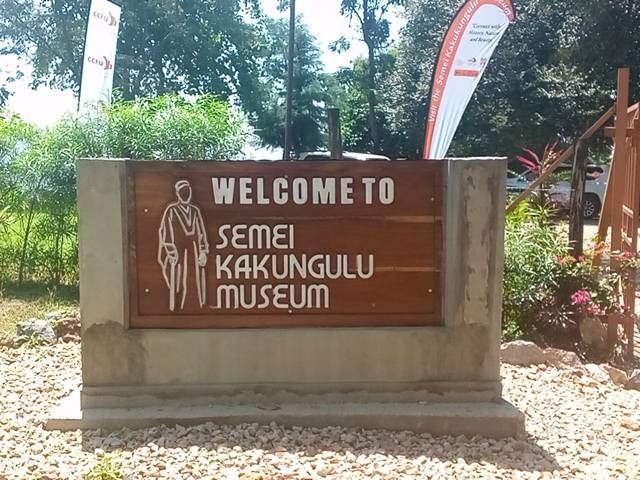
It is this combination of place, memory and landscape that gives the museum its particular character.
For students, it provides a classroom beyond the walls of school. For researchers, it offers a starting point for engaging with Eastern Uganda’s social, political, environmental and religious history. For tourists, it creates another reason to spend time in Mbale and the Mount Elgon region.
Heritage That Works for the Community
The museum’s significance extends beyond preservation. Its story is also connected to the people living around it.
Through community skilling initiatives, local groups are supported in crafts production, creating opportunities for traditional skills to become sources of livelihood. Locally made products can also find a market through the heritage experience.

This creates a meaningful relationship between tourism and community development.
A heritage site becomes more powerful when the surrounding community can participate in its story and benefit from its existence. At Gangama Hill, the museum is gradually becoming a place where history, conservation, enterprise and tourism meet.
A New Reason to Visit Eastern Uganda
For years, Eastern Uganda’s tourism story has often been associated with the dramatic landscapes of Mount Elgon, Sipi Falls, coffee experiences and outdoor adventure. The Semei Kakungulu Museum adds another dimension.
It gives visitors a reason to slow down and understand the people and histories behind the landscape.

A visit can easily form part of a wider Eastern Uganda itinerary, combining Mbale’s cultural heritage with Mount Elgon’s scenery, Sipi’s waterfalls, coffee experiences and the region’s living traditions.
For families, the museum offers an opportunity to introduce younger generations to history in a physical and engaging setting. For schools, it is a place where lessons about Uganda’s past can move beyond textbooks. For international visitors, it provides an unusual window into the intersection of colonial history, African leadership, conservation and the development of Uganda’s Jewish community.
A Museum With a View and a Story
There is something particularly fitting about the Semei Kakungulu Museum standing on a hill.
From Gangama, one can look across Mbale and see a landscape that has changed dramatically since Kakungulu’s time. Roads, buildings and a growing city now stretch across the valley, while Mount Elgon continues to stand in the distance.
The museum sits quietly between those two worlds — the Uganda that was and the Uganda that continues to become.

Its greatest value may therefore be found not in any single artefact, photograph or building, but in its ability to connect generations.
It reminds visitors that heritage is not simply about preserving the past. It is about giving the present a deeper understanding of where it came from.
Perhaps that is what makes Gangama Hill worth the journey.

The Semei Kakungulu Museum is a place to encounter history, but also to enjoy nature, breathe in the quiet of the hillside and look out over a city carrying its own story forward.
For anyone travelling through Eastern Uganda, it offers a place where the past has been given room to speak, while the landscape quietly reminds us that every legacy is part of a much bigger story.